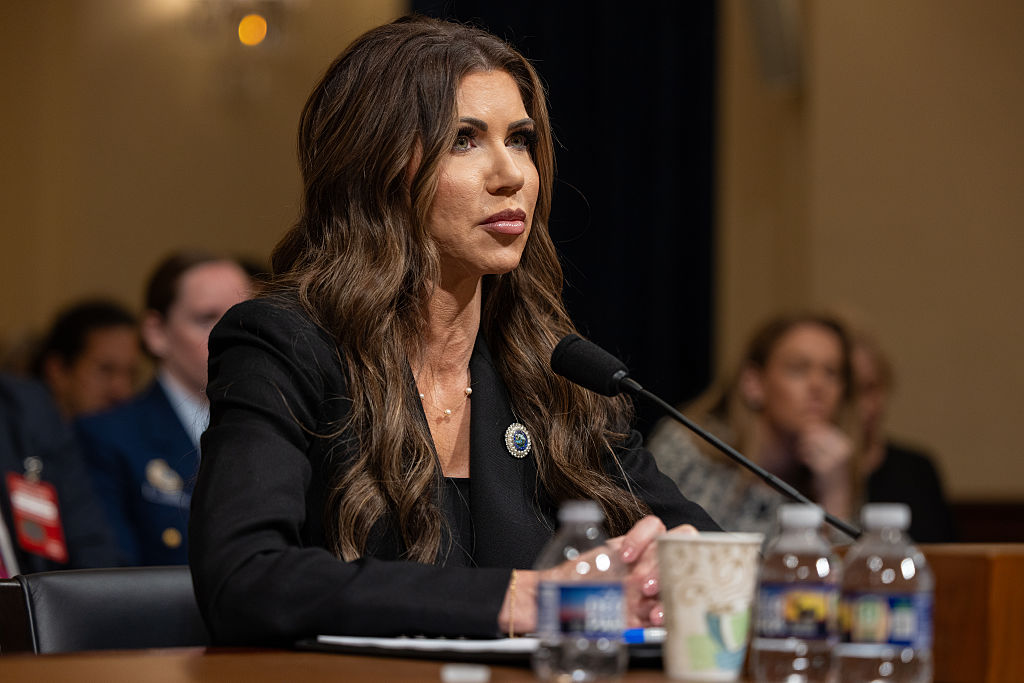
South Dakota Governor Kristi Noem stated on national television that she ordered the removal of a plane carrying migrants despite a federal judge’s directive blocking such an action. Her acknowledgment has drawn significant national attention, with the incident now becoming a focal point in ongoing debates over executive power, immigration enforcement, and compliance with judicial orders.

The televised admission came during an interview in which Noem was asked about her recent actions surrounding immigration flights that had arrived in the state. During the exchange, Noem stated that she proceeded with deportation efforts because she believed the judge involved in the case was an “activist judge.” According to her remarks, the aircraft in question had been prepared to transport migrants out of South Dakota in coordination with state-level directives. The federal judge, however, issued an order that temporarily prohibited any removal actions until a further hearing could be held.
Noem said during the interview that she regarded the judge’s directive as illegitimate and maintained that state officials were acting within their authority. She further stated that she moved forward based on what she described as her responsibility to enforce state law and to prevent what she characterized as federal overreach. Her comments marked the first public confirmation that the plane was allowed to leave despite the injunction in place.
The situation began earlier this week when reports surfaced that state officials had coordinated the transfer of migrants who had recently arrived at a regional facility. Immigration authorities had not issued a federal removal order, leading to a legal challenge from several advocacy organizations. They argued that the individuals on board were entitled to due process before any relocation or removal could occur. The judge’s order, which was issued late in the evening prior to the aircraft’s departure, instructed state officials to halt any movement until further legal clarification could be provided.
A spokesperson for the South Dakota judiciary confirmed the timeline of the order and noted that it had been transmitted to the relevant agencies shortly after being issued. The spokesperson stated that, according to court records, the order was delivered electronically to both the governor’s office and the state’s Department of Public Safety. Whether the order was acknowledged by the personnel involved at the time of the aircraft’s departure has not yet been clarified through official statements.
Federal officials have not yet confirmed whether an investigation is underway, though multiple legal experts have stated publicly that ignoring a judge’s order may constitute a violation of federal law. Sources familiar with the situation indicated that several agencies have requested copies of the communications exchanged before and after the removal action, suggesting that federal authorities are reviewing the matter.

Members of Congress responded quickly after the televised remarks. Several lawmakers issued statements calling for additional oversight, while others requested hearings to determine the extent of state involvement and whether federal statutes were violated. Some officials emphasized the need to examine the coordination between state personnel and aviation operators responsible for transporting the migrants.
Local officials in South Dakota also reacted throughout the day as additional details emerged. Some state legislators called for the release of all documents related to the deportation, including internal memos, emails, and directives connected to the flight. They argued that the public should have access to information regarding how the decision was made and which officials authorized the departure. Others in state government defended the governor’s actions and reiterated concerns about federal immigration enforcement practices.
Immigration advocacy groups have said they are gathering testimony from individuals who were scheduled to appear at the next court hearing before the deportation occurred. Lawyers representing several of the migrants have announced that they intend to file additional motions seeking clarification on the legal status of those removed from the state. They noted that the federal court had explicitly ordered a pause on all removal actions until further proceedings could be held.

As of today, the exact number of migrants on the aircraft at the time of departure has not been formally disclosed. Records from the facility where they had been processed suggest that several dozen individuals were awaiting further review of their immigration status. Advocacy organizations stated that some of them had ongoing claims that required adjudication.
The Department of Homeland Security has not released a statement regarding the situation, but officials familiar with the matter indicated that the agency is compiling information to determine whether federal jurisdiction was superseded. It remains unclear whether DHS or the Department of Justice will issue any immediate guidance or pursue formal steps in response to the governor’s acknowledgment.
Governor Noem has not issued an additional statement following the interview. Her office has also not responded to requests for clarification regarding the timeline, procedural steps taken by state personnel, or communications between state agencies and federal authorities. State records that could provide additional insight have not yet been released publicly.

Legal analysts have noted that the next steps will depend on whether federal authorities seek judicial review or oversight hearings are convened at the congressional level. Additional information may also arise if court filings expand to include new testimony or documentation related to the aircraft’s departure.
The situation continues to unfold as federal, state, and legal organizations seek further details regarding the sequence of events, the implementation of the court order, and the implications of the governor’s televised admission. Further updates are expected as more official statements become available from federal agencies, legal representatives, and state officials.