45 minutes ago, former official Kash Patel told members of Congress that there was no credible information indicating Jeffrey Epstein trafficked minors, a statement that immediately drew scrutiny from legal analysts and lawmakers.

45 minutes ago, former official Kash Patel told members of Congress that there was no credible information indicating Jeffrey Epstein trafficked minors, a statement that immediately drew scrutiny from legal analysts and lawmakers.

Forty-five minutes ago, remarks made by Kash Patel during congressional testimony drew renewed attention to the legal and institutional standards governing oversight, fiscal accountability, and the integrity of public records.

In his statement to lawmakers, Patel asserted that there was no credible information indicating that Jeffrey Epstein trafficked minors, a claim that immediately prompted examination by legal experts familiar with prior judicial proceedings and documented settlements.

The reaction was not solely about the substance of the claim, but about the broader implications for congressional oversight, which relies on accurate testimony to inform legislation, appropriations, and institutional reform.

From an institutional perspective, congressional hearings function as a key mechanism for allocating public resources, shaping enforcement priorities, and evaluating whether existing agencies are meeting their statutory obligations.

When testimony is disputed or potentially inaccurate, lawmakers face increased difficulty in assessing policy effectiveness, particularly in areas involving victim services, law enforcement funding, and interagency coordination.

Fiscal implications also emerge when contested statements influence how Congress allocates funding for investigations, prosecutions, and regulatory compliance related to trafficking and financial crimes.

Legal scholars note that false or misleading testimony can distort budgetary decisions by minimizing perceived risks or downplaying the need for sustained oversight expenditures.

At the same time, determining whether testimony rises to the level of perjury involves a high legal threshold, including proof of intent, material relevance, and clear contradiction by established evidence.

This distinction is significant for institutional stability, as aggressive or premature enforcement actions against witnesses can chill cooperation with congressional inquiries.

The episode highlights a persistent challenge within democratic governance: balancing accountability with procedural fairness in oversight processes that carry both legal and fiscal consequences.

Historically, high-profile testimony disputes have often led Congress to commission independent reviews or audits, adding layers of institutional cost but sometimes restoring confidence in official findings.

In policy terms, the controversy underscores the importance of maintaining comprehensive records, transparent evidentiary standards, and clear communication between investigative bodies and lawmakers.

It also raises questions about whether existing oversight frameworks are sufficiently equipped to handle complex cases involving financial networks, cross-jurisdictional conduct, and long-term institutional failure.

As attention continues to focus on the testimony, the broader issue remains how institutions can ensure reliable information flows without politicizing enforcement or undermining fiscal responsibility.

Ultimately, the significance of the moment may lie less in a single statement and more in how Congress responds to protect the credibility of its oversight function and the public resources tied to it.
Related Posts

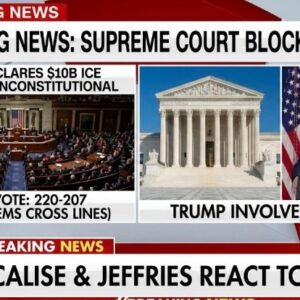
REPORT: Supreme Court Block House Passage of Sweeping DHS Funding Bill, Declaring the $10 Billion ICE Expansion Unconstitutional After Democrats Crossed Party Lines to Deliver a 220-207 Victory Following Donald Trump’s involvement

JUST IN: House Passes DHS Funding Bill After Intense ICE Fight — Democrats Split, Trump Administration at Center of Battle WASHINGTON — January 25, 2026 In a sharply contested vote…

Read more

BREAKING; The U.S. House and Senate Secure the Necessary Votes to Pass the Bipartisan NATO Unity Protection Act, Explicitly Blocking Donald Trump From Using Military Force to Seize Greenland, a Danish Territory Under NATO Protection

WASHINGTON, D.C. — Congressional leaders from both major parties announced Tuesday that the U.S. House and Senate have secured the votes necessary to pass the bipartisan NATO Unity Protection Act,…

Read more

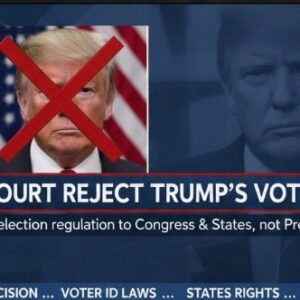
UPDATE; The Supreme Court Rejects Donald Trump’s Attempt to Mandate Voter ID Nationwide, Reinforcing That the Constitution Grants Election Regulation Powers Solely to Congress and the States, Not the President

Supreme Court Blocks Trump’s Nationwide Voter ID Mandate, Affirms States and Congress Control Elections In a landmark ruling, the United States Supreme Court has struck down President Donald Trump’s attempt…

Read more

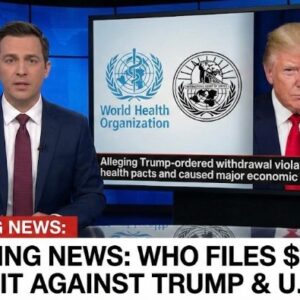
JUST IN: World Health Organization Files $1 Billion Legal Action at the International Court of Justice against Donald Trump and United States, Alleging Trump-Ordered U.S. Withdrawal from the Organization Violated International Health Agreements and Caused Major Economic Losses

In a dramatic escalation of diplomatic and legal tensions, the World Health Organization (WHO) has initiated a $1 billion lawsuit against the United States and former U.S. President Donald Trump…

Read more

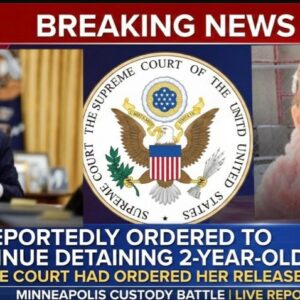
JUST IN: President Donald Trump Reportedly Order ICE to Continue Detaining 2-Year-Old Girl Taken Into Custody in Minneapolis, Even After Supreme Court Orders Her Release

Controversy Erupts as Reports Claim Trump Allegedly Directed ICE to Detain 2-Year-Old in Minneapolis Despite Supreme Court Order Minneapolis, MN – January 24, 2026 Reports have emerged suggesting that President…

Read more

BREAKING; The U.S. House and Senate Secure the Necessary Votes to Pass the Bipartisan NATO Unity Protection Act, Explicitly Blocking Donald Trump From Using Military Force to Seize Greenland, a Danish Territory Under NATO Protection

WASHINGTON, D.C. — Congressional leaders from both major parties announced Tuesday that the U.S. House and Senate have secured the votes necessary to pass the bipartisan NATO Unity Protection Act,…

Read more

Leave a Reply

Your email address will not be published. Required fields are marked *