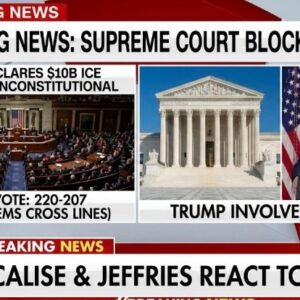
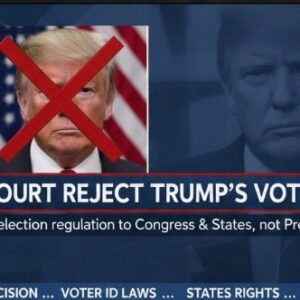
The ruling concluded that efforts to block unannounced inspections violated established legal standards governing legislative oversight of executive agencies.
By affirming the lawmakers’ right to conduct inspections without prior notice, the court reinforced long-standing principles designed to ensure transparency within federal detention operations.

Legal observers noted that the decision underscores Congress’s role in monitoring conditions, compliance, and administration inside facilities funded and authorized by federal law.
The case arose after members of Congress alleged they were unlawfully prevented from entering ICE facilities, despite statutory provisions permitting oversight visits.
Judge Cobb’s opinion emphasized that oversight is not discretionary, but a core function of the legislative branch, particularly where civil liberties and public accountability are implicated.
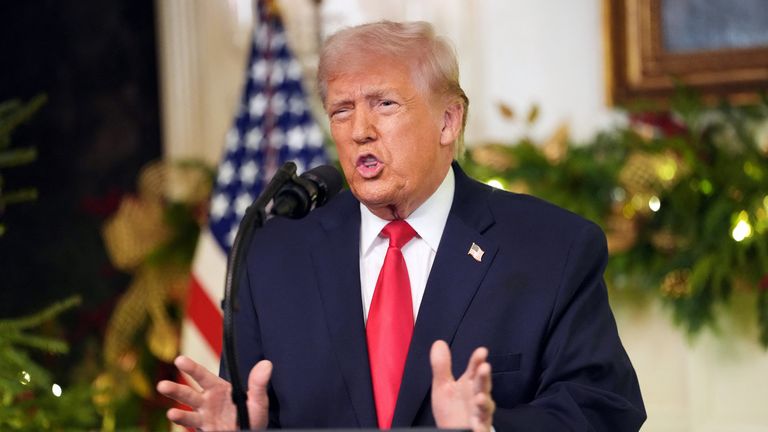
The ruling also addressed arguments advanced by the tr@mp administration, concluding that the restrictions lacked sufficient legal justification.
Supporters of the decision described it as a reaffirmation of checks and balances, arguing that independent inspection is essential to credible governance.
Critics cautioned that unannounced visits must still respect safety protocols and operational realities within secure facilities.
Legal analysts responded that the court’s decision does not eliminate safety considerations, but prevents blanket denial of access based on executive preference.
The judgment immediately reshaped the practical relationship between Congress and ICE, enabling lawmakers to conduct oversight visits at any time.
Advocacy groups viewed the ruling as a step toward increased transparency, particularly amid ongoing debate over detention standards and administrative accountability.
Others emphasized that the decision does not predetermine findings from inspections, but ensures the process can occur without obstruction.
The case highlighted how disputes over access often become proxies for larger conflicts between branches of government.
Media coverage noted that while the ruling was procedural in nature, its implications extend to broader questions of executive compliance with oversight law.
Constitutional scholars observed that courts rarely intervene unless access restrictions clearly exceed legal bounds, adding weight to the decision’s significance.
The development also renewed attention to the importance of judicial review as a stabilizing force when institutional conflicts escalate.
As reactions unfolded online, interpretations diverged along familiar lines, reflecting broader debates about immigration enforcement and transparency.
Despite differing views, the ruling provided clear guidance on congressional authority moving forward.
Fifty minutes later, the decision stood less as a partisan victory than as a legal clarification with lasting institutional impact.
At its core, the judgment reaffirmed that oversight functions not as a courtesy, but as a constitutional responsibility that cannot be selectively denied.